МЛН

Articles by "painting"
'90s shows @shampooty 100 gecs 101 Things To Do With Your Modem 1080p 1969 1990s 20 is the new 40 2000s fashion 2012 2013 2013: Appropriating a 2013 2014 24 3D Animation 3D Cool World 5.4 A Guide to Buying Haunted Items A. G. Cook A.I. aaron carnes Abelton Abner Jay abstract art absurdism acoustic action action figures Ad Hoc Adam Harper adolescence Adult Swim Adventure Time advertisements advertising aesthetic aesthetics Afterschool Specials AI art Alain Delorme Alan Vega album art alcohol Alejandro Jodorowsky Alexandra Rowland Alissa Timoshinka Alt Space altered states alvin & the chipmunks ambient American Apparel analyses analysis Andre Ulrych Angelina Jolie Angus MacLise Animal Collective animation Ann Steel Anthony Bourdain Anthony Fantano Anti-art anti-consumerism anti-fashion anti-technology anti-virus software anxiety Apophenia Appropration Aquarium Drunkard aquariums architecture Architecture in Helsinki Architecture of Utopia archive ariel rechtshaid Army of Trolls art Art Bears art installation art museum articles artificial intelligence artist artists ASMR Astral Weeks Austin Psych Fest 2013 auteur authenticity Autonomous Sensory Meridian Response avant garde Avey Tare and Panda Bear b-movies Babette's Feast Baby Blue Baby Cartoon Rhymes bad operation Band People Barf-O-Rama Baroqueikebana Barry Levinson Barstool Sports baseball cards BASEKetball bass guitar bath salts Battle vs Death Battle bbrainz beautimus Begotten believers Ben Butcher Bernard Dumaine Berndnaut Smilde Bertolt Brecht Betamax Plus Bill Doss Bill Murray Billy Childish bio-dynamic biodegradable urn biography biosonic MIDI technology Black Dice Black Flag Blackest Rainbow Records Blackout Blade Runner Blockbuster blog Blow Job: An Extreme Wind Photoseries Blue Velvet Bob Marley Bob Ross Bongwater Boo Boo books bootleg toys Bradford Cox brain tingles brains Brand New Wayo Brian Brian Eno Britt Brown Brittany Murphy Broadened Horizons: The Ultimate Shit List Bruce Goff Bruce Nauman Brushy Brushy Brutalist Architecture Bubblegum Bass Bubbly Bulbasaur Building the Bridge Burger bus stops butterfly Cadillacs and Dinosaurs Can cannabis cap_able career motivated Carl Sagan Cartoon Network Casino Night catbite Censorship chandelier Charles Grodin Charles Thomson Charlie Brown Cheddar Goblin children children's books Chillwave chopped & screwed chris cutler Chris Jordan Chris Maggio Chris Marker Christopher Columbus Christopher Reimer Christopher S. Hyatt Christopher White Chrysta Bell Church of the SubGenius cinema click and point games clothes Clothes of the year 2050 Clouds Coci Cocteau Twins Cody Meirick collaboration collage collage art Collateral Damage collections collectors items comedy albums comedy films comedy music comfort tv comic books communication Comus condition consciousness consumerism content drift conversations cooking cookwear copyright cosmic jazz costumes cottagecore cover band Cradle of Filth Crass creepy criticism Crock Pots crown shyness cult films cult movies cultural movements culture Culture Jamming Cyber Secrets #3 Dada Daevid Allen Dallas Observer Damien Hirst Damo Suzuki Dan Lam Daniel London Daniel Lopatin Danni Filth Danzig dark database Dave Allen David Bowie David Henry David Lowery David Lynch David Toro David Zucker Dean Ween Dean Zeus Colman December Decimus 4 decline Definition of Hunk Dennis Flemion dental calendar Derek Guy design Destroy All Monsters Detachment and the Spiritual Life Diane Cluck dick jokes dieworkwear digital art Digital DIY Labels digital trends Dimensions of Dialogue Dimitri Tsykalov Diplo director directory DIS Magazine disco Discogs Discordianism discussions distaste DIY DJ Dog Dick DJ Evangelion Fan Theory DJ Warlord documentaries dolphins Donka Doka Dope Diglett Dopesmoker Doug Ferguson Douglas Hill Dr. John drawing Drinkfy drone drone music drugs Duane Pitre dub Dudeism Duppy Gun Dustin Wong Dux Content DVD dysmorphia dystopia Earth Eartheater eBay echo chamber edible fixtures eichlers electronic music electronica Eleh elevators Éliane Radigue Elias Mehringe Elizabeth Hart ELO Emily White emo fashion Energy Entourage Ephermeral Work Eric Copeland Eric Lumbleau esoterica essays etienne conod Eurock Evan Prosofsky events Excepter exercises exhibition experimental experimental cuisine experimental music eyesight fake movies fake toys fake tv shows Family Fan Fiction Fandom Music fashion fast food FDA feature films Felicita Felicity fellatio fiction film film reviews films fire place glass Fire-Toolz Fishing Floating Flying Spaghetti Monster Foetus FoFoFadi food food porn Ford Four American Composers: Robert Ashley France Frankie Valli and the Four Seasons Franz Nicolay Frasurbane fraud Fred Camper Freddy Got Fingered free Free Blockbuster free jazz Frutiger Aero Fun Boy Three furniture future pop gadgets gallery Gang of Four Gen Z Generation Y Generation Yawn Genesis P-Orridge genre George Harrison George Plimpton Germany GFOTY Ghost Capital Ghost Modernism Ghostcapital III ghosts Ginny Arnell Giorgio Moroder Glenn Branca Global Village Coffeehouse golden retrievers Gong Goosebumps (TV series) Gorilla vs Bear Goth graphic design grooming Groundhog Day Gruff Rhys Guest Mix Guest Mixes guide guides Guillermo del Toro guitar tunings gummy bears Guo Yi-Hun Guru Guru Gustav Holst GVC hacker culture Hackers hacking Haircut Halloween halloween mix hallucinatory hallucinogens therapy handcrafted objects Hannah Diamond Happiness Harmony Korine harry sword Harvey Milk Hausu Mountain healing HEALTH health & fitness Health Goth hearing loss Hella Hellraiser Hem Sandwich Henry and Glenn Forever Henry Cow Henry Darger Henry Rollins Hippos in Tanks hipster culture hipsters Holger Czukay Holly Herndon holograms Holotropic Breathwork holy fuck Holy Warbles Home Alone homes Homestuck hope hopepunk horror horror movies household objects How to Have a Zen Attitude How to Keep Healthy httpster humaity humanities humor Hung I-chen Hunk Hunk uniform (loosely) hyper connectivity hyperreal Hyperreality I Have No Idea What I'm Doing Iasos ice cream identity Idrissa Diop and Cheikh Tidane Tall Igor Wakhevitch Illuminated Paths Ima Read imagination Important Records independent movies indie fashion indie rock indie sleaze industry news Infectious Disease Balls ink inspiration inspirato Instagram installations interior design internet Internet Archive internet art interviews intoxicants IRL Glasses irony it is most definitely art Ivan Cash Iván Diaz Math J Henry Fair J.J. Abrams Jabberwocky Jack Black Jack Long James Blackshaw James Bridle James Ferraro James Wines Jan Svankmajer Japanese Bug Fights Japanoise Jared Davis Jeff Bridges jeff rosenstock jer Jessica Chen Jessica Ekomane Jif Peanut Butter Jimmy Buffett John Brien John Carpenter John Fell Ryan John Hamblin John Lurie John Lytle Wilson John Maus John McAfee John Olson Johnny Lee Miller Journal of Nervous and Mental Disease Julian Cope Julian Koster Julien Pacaud junk food Junk Food Dinner Kane West Kazumasa Nagai Keippah Kelly Reichardt Keri Russell Kevin Ayers Kevin Champeny Khelifi Ahmed Kickstarter Kids Incorporated Kids Toys Adult Issues kill lincoln Kim Laughton King Frog KinoVino Kiyohiko Senba and The Haniwa All-Stars Kleenex Knitting clock Krautrock Krautrocksampler Kria Brekkan Kurt Loder L.A. La Croix LA Vampires Land art Lauren Boyle law of attraction layout Les Claypool Lester Bangs Life Begins at the End of Your Comfort Zone Life During Wartime lifestyle lilangelboi Lindsay Cooper liner notes linguistics link rot Lipgloss Twins lists literature Little Dolls live reviews live streaming LL Cool J lockdown Lol Coxhill London Longest Recorded Echo Lou Reed Lou Reed: Caught Between the Twisted Stars Love (sculpture) LSA LSD Luca Yupanqui Lucie Thomas Lucky Me Luke Wilson Lumen Lydia Lunch M. Geddes Gengras M. Sage Macauly Culkin Macintosh Plus magazines Magic and Superstition magic mushrooms maintenance art Majestic Casual Malcolm McLaren Malcolm Rebennack Male Chef Mandy Manicure Records manifesto Manifesto For Maintenance Art mannequins manz Marco Roso marijuana marine life Mark Prindle Mark Schultz Martin Short Mary Steenburgen masterpieces Matt Farley Matt Furie Matthew Lutz-Kinoy Matthew McConaughey Max Headroom Max Payne 3 Maya Land Mayan Apocalypse McDonald's MDMA Mean Clown Welcome Meat Clothing media media culture Meditation memes Men Without Hats Meow Wolf merchandise Metal Machine Music Mica Hendrix Michael Gambon Michael Nesmith MIDI Midjourney Mike Hughes Mike Kelly mike park mike sosinski Mike Stoklasa Mindfuck mindfulness Minecraft Miracle Legion miscellaneous Mist Mister Mellow Mix Mixes mixtapes modern music analysis modernism Molecular Gastronomy molly Monkees monkeys monoskop Moon Glyph Moth Cock movements Movie Promotional Merch Unlimited movies movments Mr. Impossible Mr. T Mr. Tinglemittens Mrs Doubtfire Mukqs Mulholland Drive murder music music charts music community music critic music criticism music downloads music journalisim music journalism music marketplace music software music videos music websites Music with Roots in the Aether: Robert Ashley musicians mustard plug Mutant Sounds My Bloody Valentine My Little Pony My Mother's Brisket & Other Love Songs my sharona Myles Byrne-Dunhill NASA natural Natural Materials & Structures: Trend Analysis nature Nautipuss negative influencer neon lights Nest HQ Nestflix new age music New Mexico New York Times news Nickelodeon Nicklas Hultman Nicolas Cage Nicolás Romero Escalada Nicole McLaughlin Nightcore Nightcorey Nimbus Njena Reddd Foxxx No Use for a Name No Wave No-Neck Blues Band noise NOP Nora Ephron Nordstrom Cafe Normcore nostalgia Not Not Fun Not The New York Times NOWNESS NPR Nu Twee nudity Nurse With Wound Nurse With Wound List NY NYC HELL 3:00 OBEY obituaries Obvious Plant ocean oddball music Oingo Boingo Old Joy Oliver Rowe Olivia Newton John Oneohtrix Point Never Online Underground Op Art optical illusion optimism Organ Armani Ornette Coleman outsider art P.T. Anderson Pacific Rim packaging paint paint flowers painting Painting With John paintings pandemic pandora's box Panos Cosmatos paranormal activity paranormal objects parody Party Pills pastoral Pat Murano Pat Pollari Pataphysics Paul Reubens Pauline Oliveros PC Music peace pedalstare Pee-Wee Herman Penny Rimbaud Pepper Mill Rondo perception shifts Perfect Lives performance art Perma personal growth Pete Swanson Peter Shumann Ph.D. Phil Connors philosophy phonebook Phonocut photography pig-snails Pilgrim Simon Pitchfork pizza planetary chocolates plates Plonk art Plop art Plug.DJ plunderphonics podcasts Pokecrew Pokemon Polaris Polluted Water Popsicles Pollution PON STOP NOP Poolside Radio poop pop art pop culture popcorn_10 popsicles poptimism porn post-internet posters pranks predictions Primer Procrastination Principle products prog rock Prolaps promo psilocybin psychedelia psychiatry Psychic Ills Psychic TV psychology public art Public Art Fund punk punk cd commercial punk rock puppetry Quasimoto Questlove quotes R Plus 7 R.I.O. Rachel Anna Simon Radio Broadcasts radio stations Randy Gilson Randy Warhol Randyland rastafarianism raw meat Ray Lynch Raymond Pettibon Readful Things Real Love recipes recommended records record label record labels records recycling Red Bull Music Academy Red City Noise reel big fish reggae reincarnated Religion Rem Lezar Remodernism Remote Viewer Repo Man retro reviews Richard Beck Richard Sears Rick Moranis Rick Springfield Ricky Allman Rinse.fm RIO Rob Tyner Robedoor Robert Anton Wilson Robert Ashley Robert Chistgau Robert Greenberg Robert Indiana Robert Smithson Robin Arnott Robin Williams robots rock in opposition Roddy Piper Roger Ebert Roky Erickson Ryan Hemsworth Sally Fields Salvador Dali sampling Santa Fe Sarah Davachi sausage scams scans scary Scary Stories To Tell In The Dark sci-fi science science fiction Scotland Scott Shaw sculpture Seatec Astronomy self improvement self portrait serious? Sesame Street Seth Cohen Seven Figures severance Severed Heads sex sex tapes sexy Shane Caruth Sharkula Sherman Hemsley sherpas shoegaze short films sign offline signs Simpsonwave Site-Specific Art ska ska against racism skateboarding skeptcis skull slackers slang Sleep Slime Cake sludgefest Slyme Records Snoop Dogg Snoop Lion So You'd Like to...Be an Anti-Gen Xer (Part 1) So You'd Like to...Be an Anti-Gen Xer (Part 2) social networks Soloman Chase Sonic Wonderland Sonic Youth Sopa Pipa Sophie sound sound archives sound art soundcloud SoundSelf space space plates Space Trips Spencer Longo SPF420 Spider-Man spirituality spoof sports St. Bernard's Sports Star Trek Star Wars Stephen Colbert Stephen Gammell Stereo Mood Steven Stapleton still life stoner comedies stoner metal stoner movies streaming Stump Subcultures subversive humor Subvertising Suicide summer Sun Araw Sun Ra Sunday is Raining sunglasses sunshine pop surrealism sustainable fashion Swans synesthesia System Focus T.V. Shows Taco Bell Taiwan TALSounds tattoos technology teen drama Television Ten Steps on How to Become a Slacker Terrence Malick thc The 13th Floor Elevators The Adventures of Pete & Pete the angles of comfort The Apples in Stereo The Art Box The B-52s The Baseball Card Vandals The Beach Bum the bear The Big Lebowski The Birthday Party The Black Madonna The Bread and Puppet Theater The Coen Brothers The Congos The Day My Kid Went Punk The Family International The Frogs The Great Puke-off the handmaid's tale The Illuminatus! Trilogy The Incredible String Band The Jetsons The Last Trick The Life Stains The Lounge Lizards The Master The Master Musicians of Joujouka The Music Tapes the new luddites The Now Age The OC The Odd Recommendation The Oh of Pleasure The Olivia Tremor Control The Phoenician Scheme the pitt The Red Shoes The Relative Band The Roots The Shape of Jazz to Come The Shining The Simpsons The Strokes the studio The Sweet Homewreckers The Sylvers The Tubes The Velvet Underground The Wire therapy Theses on Punk They Live Thibault Zimmerman Things Organized Neatly things that would never have happened until they happen This is how NASA wakes up astronauts Thomas Newman Throbbing Gristle Thurston Moore Tinashe tiny hands tips To the Wonder Todd Solondz Tom Green tomato soup Tony Futura Tony Sly Toro y Moi Tox Modell toys Trans Air Records trash Treasure Hunt trees Trevor Cox Trevor Reveur Trey Parker and Matt Stone tribute Trippy Turtle tromp l'oeil Tron tumblr Tupac turntable.fm Tuxedomoon TV TV Operas TV shows Twee Twin Peaks Twitter udi koorman UK underground art underground music unicorn unknown unpublished Unresponsive Design upcycling Upstream Color Urban Dictionary urban legends Urban Outfitters URL shows V/A - West Indies Funk 3 Val Kilmer Van Morrison vaporwave vapourwave vegan Velvet Underground VHS video Video Art video edit video games video rental videos Vince Guaraldi Vine vintage vinyl Vinyl Marketwatch Virtual Reality Wabi-Sabi Want to save your eyes? Change your light bulbs. Warp Records Washed Out Waterpark weapons websites WEDIDIT Weird Al wellness Wendy's Wes Anderson WFMU What Makes A Bad Movie Enjoyable? WHTEBKGRND wifislilangel Wikipedia Wild Man Fishcher Will Oldham Williams Street Winston Riley Wolf Eyes Women Woods Y2K Yellow Swans youth culture youtube YouTube Poop Zebra Katz zen Zen Filmmaking Zim & Zou Zin-Say Zonal Zoom Lens
Showing posts with label painting. Show all posts

Why Rachel Anna Simon Can’t Stop Painting Spider-Man Getting Head


By 

Photographed by Taryn Segal


Rachel Anna Simon, photographed by Taryn Segal.

For over 20 years, the upside-down kiss from the 2002 Spider-Man movie has lived rent free in our heads. Was it the casting? The rain? Perhaps the unlikely physics of it all? Nonetheless, we’re not alone. That image of Tobey Maguire and Kirsten Dunst has been preoccupying the painter Rachel Anna Simon, too. Her new solo show at Market Gallery, You & Me, features Spider-Man himself in a loop of sexually explicit vignettes, all born from a single intrusive thought Simon had during a lash appointment. “Maybe I just took that further in my mind,” she said on the phone last week. “Well, clearly I did.”

The artist and mother (who was once married to filmmaker Harmony Korine) insists that no fetish nor Marvel fixation can be found here, just the injection of humor fine art so sorely needs. In that regard, she has triumphed. The works are funny, memorable, and just the right amount of unhinged. After a raucous opening earlier this month (where one of the paintings was stolen and has yet to be recovered), I got on the phone with Simon to ask about flipping her vintage closet on Depop and, of course, whether the girls in the paintings are her. 

———

SANDSTROM: Thanks for making time. There’s so much I want to talk about. But the first thing I have to tell you is that I’m obsessed with your Depop. I think everyone is. 

SIMON: Thank you.

SANDSTROM: How come you’re selling all of this beautiful stuff? It’s so fun to flick through.

SIMON: Well, I’m 39, so I’ve spent 20 years collecting clothes. And in the past year I’ve started spending more time in New York, because I’m trying to start a career. Space is much more limited here, and it’s a big life change so I’m just trying to get rid of things that I don’t need anymore. But it’s all really cool stuff, so I don’t want to just give it away. It’s mostly fun to have friends come over and do closet sale type stuff and trade.

SANDSTROM: I’m sure it’s a fun project to chronicle your whole life through your outfits, too. 

SIMON: It is really fun. I love fashion. I just have so much. I had a bunch of storage units and I’m just now more focused on painting and creating. I’d rather have space for a studio than more closet space.

SANDSTROM: Yeah. Well, before we talk about the work, someone stole a painting from the opening right? Did they give it back?


SIMON: No, they did not give it back.

SANDSTROM: That’s really crazy.

SIMON: It’s really crazy. It’s one that had been sold. But I’m going to recreate it. It was untitled, so I’ll just title it “Number two,” and see if the buyer wants that. I don’t know, maybe the lore makes it even better. Someone said later that they saw someone holding it and they thought it was weird. But no leads. No one has come forth to return it.

SANDSTROM: I’m sorry. 

SIMON: It’s a bummer. But also, what can you do? It’s just a lesson learned… Security. 

SANDSTROM: I know. With an apartment gallery, it’s tough. It’s meant to feel like a family and friends thing where you’re like, “Obviously, I didn’t think anyone was going to steal from me.”

SIMON: Exactly. We weren’t really prepared for that, but I guess you always have to be prepared.

SANDSTROM: I guess you always do. I posted a picture of my Instagram story of one of the works. I think it was one of my most replied-to stories in a long time, more than a swimsuit picture or whatever.

SIMON: More than a thirst trap?

SANDSTROM: More than a thirst trap. People kept asking, “What is going on with these?” And I was like, “I don’t know, but I’m going to find out.” So now I can ask about the  origin of the Spider-Man story. 


SIMON: [Laughs] It’s really more simple than it seems, although I don’t really know about the psychology behind it. But as I said in the press release, I was just getting my lashes done, and this image of Spider-Man getting a blowjob popped into my head. I couldn’t stop thinking about it the whole time I was laying there. So when I finally opened my eyes, I got on Postmates and ordered colored pencils, because I didn’t even own art supplies. When they arrived, I just started drawing it over and over. At first I was really scared to share because I’ve never shared anything like that before–and I’ve never done anything like that before. But the response was immediately really positive and supportive, so I just took it from there.

SANDSTROM: I think people love the humor in it. It’s very narrative and very fun. Obviously we have to clear this up, are you the person in the picture?

SIMON: At first I was like, “It’s just a girl.” But I guess just by nature, I was drawing someone that resembled myself. Then I realized, “Oh yeah, that’s totally me.” So in all the drawings, I started to add something to show it was me, like the same color nails, or a bracelet or a bikini bottom. 

SANDSTROM: Cute. Well, I guess that begs the question, does that kind of imply that you’re horny for Spider-Man? 

SIMON: No. [Laughs]

SANDSTROM: Okay.


SIMON: I’m not. I don’t really know what it all means. It’s just something that I imagined and had to create. Then I just loved the way it looked, so I just kept going with it. Then some of the paintings have become more abstract and they’re more deconstructed. Lots of people keep suggesting, “Next you should do Superman,” or whatever. But it’s not a Marvel superhero obsession, it’s just that specific image. I have no idea why.

SANDSTROM: But Spider-Man and Marvel didn’t have a specific hold on you? This was just something that came into your head and you had to follow it through?

SIMON: No, my friend Sabrina, reminded me that over the winter we were watching Spider-Man. She thinks that that’s where it came from.

SANDSTROM: Well, I was thinking about how Kirsten Dunst and… I forgot his fucking name–

SIMON: Tobey Maguire. Yeah, the kiss. That came on and everyone was like, “This is the most romantic kiss in movie history.”

SANDSTROM: It kind of is.

SIMON: I think it really is. It’s iconic. So maybe I just took that further in my mind. Well, clearly I did. 


SANDSTROM: Does it feel like you’re opening a new chapter of your life and exploring yourself as an artist? You mentioned you want a studio space? 

SIMON: Yeah. I’m just really trying to honor myself and trust myself, and be true to what I want to do. And what I want to do is create art, be part of a community. 

SANDSTROM: How does that feel?

SIMON: It feels great. The opening was so nice. So many people came out and supported me, and they didn’t have to. It just really meant the world to me. It showed me that I have a path that I’m on, and I just want to enjoy it. I’m grateful and happy and excited.

SANDSTROM: That’s awesome. And what other kind of work are you making?

SIMON: I had a piece in a group show over the summer, and it was a painting of a horse. One of my good friends, Olivia, got thrown off a horse and she’s okay, but for some reason that inspired me to paint her being thrown from a horse over and over. 

SANDSTROM: Horses are powerful symbols.

SIMON: Yeah. And my uncle and my cousins, they’re all ropers. My uncle was a cowboy and I grew up going to rodeos and stuff like that. 


SANDSTROM: That’s so fun. With art in general, what kind of stuff do you like? What are you into?

SIMON: I’m kind of just getting re-inspired. I spent most of my life living in Nashville, Tennessee, and then the past 10 years in Miami. But now that I am spending more time up in New York to work, I get to go to openings and to the Met, and I get to see a lot of fantastic shows regularly. Being around people that share the interest, and support each other–that’s inspiring. Really, what I’ve been really into is staying home, cooking dinner and inviting friends over. Just playing music and drawing or painting together. It’s community vibe. Inviting over artists or non-artists and just getting together and doing it. It’s really fun. And then ideas come up for different shows or things like that.

SANDSTROM: That’s awesome. I also wanted to ask, do you think you’ll ever act again?

SIMON: I would. It’s unclear whether I’m going to keep or sell my house in Miami, because life is kind of up in the air. But I kind of had this funny idea of doing a comedic estate sale thing. I would like to do comedy, but I also don’t feel an itch to act. 

SANDSTROM: It’s more like if someone approached you?

SIMON: Yeah. I never say never. Friends keep telling me they have things for me, and I’m always down to do a cool project with friends. 


SANDSTROM: Do you think your next series of artworks will have the same kind of humor, or do you think you’re down to move around?

SIMON: I’m definitely down to move around, but it probably will always have kind of a weird humor. That’s just who I am. I guess some people could look at something and be like, “That’s not funny at all. That’s terrible,” and some people find it hilarious.

SANDSTROM: Do you think you’ve always seen yourself as an artist, or do you think that’s a new thing for you? Is there a switch that’s been flipped?

———

SIMON: I didn’t know that I was an artist. I never knew. Now I realize that I am and I was all along, but I just didn’t see it. I didn’t believe in myself or have the confidence, or the encouragement. I thought of myself as more of a crafter. I remember saying to my friends, “Well, I’m not an artist.” And they’d tell me, “Yes, you are. What are you talking about?” But it’s kind of scary to just one day wake up and decide that you are. There’s so many artists, who am I to say that I am?

SANDSTROM: Right. 


SIMON: Then there was that kind of moment where I hesitated like, “I don’t get to just decide I’m an artist and be accepted. That has to be earned.” But I am grateful to every single person that replied to a story or texted me, because I had a lot of people encouraging me and telling me they loved what I was doing. That made all the difference for me, really. And it really, really pushed me to keep doing it. And then to finally believe in myself and realize, “No, it’s okay. You can call yourself an artist.”

SANDSTROM: So that was the galvanizing force, other people’s encouragement?

SIMON: For sure. There was definitely some people that were like, “What the fuck?” But if that would’ve been the overwhelming reaction, I probably would’ve just deleted it. I’m glad things worked out the way they did. 

SANDSTROM: Well, which superhero would you like to fuck most? What’s your ranking? Give me your top three maybe.

SIMON: [Laughs] I really don’t think I would. I’m not like that. I’m not boy-crazy. So I really don’t know what the hell happened. It’s funny, people keep saying, “Yeah, now you should do this…” And I’m just like, “Ew, no.”

SANDSTROM: [Laughs] 


SIMON: People keep saying, “Everyone has their fantasy.” And I’m like, “This isn’t my fantasy. It’s an idea.” But I guess anything can be dissected. 

SANDSTROM: I feel like that’s the whole thing about making art though. You immediately open yourself up to interpretation. Which is really cool, but also weird.

SIMON: I think that that’s fine and that’s what art should do. I think it’s cool if your art makes people have questions and confuses them. It wasn’t planned that way. I never ever would’ve imagined that any of this would be happening right now. I don’t know what’s coming next, but there’s definitely more to come. And there will be more work that you can hang in your home. It’s not all going to be blowjob images.

SANDSTROM: I think they’re great. I think people really miss humor in art, and narrative works like that specifically.

SIMON: For sure. I think people miss humor everywhere. I think if it comes from a pure place, people are open to it and it’s not taken offensively. Or even if some people are offended, what can you do? 

Packages, CDs and scraps of food: Nicolás Romero Escalada paints the scenes of life over lockdown


In recent times, the artist has turned towards neighbourhood walks and trips to the supermarket as his inspiration.

Words 
Ayla Angelos

In 1889, the famed Dutch, post-impressionist artist Vincent van Gogh returned home from the hospital after mutilating his own ear. Like many artists would, he decided to paint a self-portrait – bandage included. This very image is what inspired the young and budding artist Nicolás Romero Escalada, who suffered greatly with ear infections as a child. “I was amazed by Van Gogh,” he says, “I became very fanatic about his works. I had the feeling that he painted them with the concept of ‘fever’, with all the lines, paint brushes and textures. As a child, I had ear infections that made me suffer a lot. I kept seeing Van Gogh’s self-portraits without an ear as a solution for ear infections.”

After this, Nicolás became interested in the graffiti scene in Buenos Aires, which inspired him to pick up a paint brush and start creating his own pieces. “Reconnecting” him with the landscape of art, it wasn’t long until Nicolás found his feet, later incorporating his love of graffiti in with the collage-inspired style of painting. “I try to work around traces that are found in a space,” he tells It’s Nice That, often turning towards symbols of everyday life as his muse. This can range from a plastic bottle of a drink “that is 50 per cent cheaper than Coca-Cola,” or an orange from a school lunch, “or even the image of Jesus, perched in house windows for good luck”. Then, he brings all of these strangely specific inspirations and twists them into one whole image, building a compilation of human existence and the elements that surround him.

Working from his studio in Madrid, Spain, Nicolás starts the day off with a pretty standard routine: a good and hearty breakfast, usually involving eggs or a Mexican breakfast. He’ll then head to the studio, sticking on a soundtrack of classical music and Reggaeton when he’s close to finishing a painting. Everything he makes is based off something, like a recent piece titled Robot – devised from a dream he once had of a giant robot, “one of those Godzilla type, half-anime,” he recalls. “You know when you have a dream and you keep thinking about it? Well, it was something like that.”


Nicolás Romero Escalada: They told me not to talk politics at the table, 90x70 oil and acrylic on linen 2020 (Copyright Nicolás Romero Escalada, 2020)


Nicolás was in Barcelona when the pandemic hit. With little else to do, he decided to fill his days with walks around the neighbourhood and trips to the supermarket. During these strolls, he noticed and consumed everything around him. “I realised that I always ate the same thing: the same cookies, eggs and water,” he notes. “It was as if time had stopped and I could see myself. Then I decided to combine the dream with reality and in a way, I think that is the summary of how I protected myself during the quarantine.”

The image itself is much like the rest of his portfolio: considered, detailed and filled with various objects and ephemera. Cartons, coffee packets, juice boxes, loo rolls and cans are layered atop one another and cleverly composed into the shape of a robot. It’s almost like one of those transformer bots that you see in the films – futuristic but at once littered with the diligent style of the artist.

They told me not to talk politics at the table is another recent piece, this time blending a vase of (nearly wilted) roses, a stack of CDS (like 2 Pac and Kendrick Lamar), a cigarette, vegetable scraps plus a couple of cats ripping to shreds an image of Donald Trump. There’s also a shiny bauble-type object in the centre, and you can see the figures of two people taking a photograph in the reflection. Everything in this image is linked to the artist’s experience over lockdown, from the mango he ate over quarantine to the leftovers of a dish he made the day before a state of alarm was declared in Spain, to an onion shaped like a bum. “In the centre I made a self-portrait in a plastic pumpkin, this is a reference to artists like Esher. But also I painted it when I made the decision to live in Europe.”

A random assortment of things, you might first guess that there isn’t much in the way of context or narrative in Nicolás’ work. Well, there seems to be a lot going on behind the imagery – even more so than the busy scenes that he’s building. “I think what I’m looking for is to question the observer,” he responds when asked how he hopes his audience will interpret the work. “I try to create a language that is an alternative to the one we always use, since it is very difficult for me to communicate in the conventional way. It also shows that today, more than ever, there is a democratisation of the image, which is also dangerous due to the centralisation of information. In the end, it is a fight with many tactics: manipulating the image, questioning the origin.”


Nicolás Romero Escalada: Robot, 70x90cm oil and acrylic on linen 2020 (Copyright Nicolás Romero Escalada, 2020)


Nicolás Romero Escalada: Continente Americano, 120x70cm, oil and acrylic on linen, 2020 (Copyright Nicolás Romero Escalada, 2020)


Nicolás Romero Escalada: I miss you (but no so much), 90x60 oil and acrylic on linen, 2020 (Copyright Nicolás Romero Escalada, 2020)


Nicolás Romero Escalada: Is this a political statement, oil and acrylic on linen, 75x85, 2021 (Copyright Nicolás Romero Escalada, 2021)


Nicolás Romero Escalada: Le Déjeuner sur l'Herbe 100x140, 2020, oil and acrylic on linen (Copyright Nicolás Romero Escalada, 2020)


Nicolás Romero Escalada: Los ultimos dias de primavera, oil and acrilic on linen 110x80, 2020 (Copyright Nicolás Romero Escalada, 2020)


Nicolás Romero Escalada: Mexico, oil and acrylic on linen 110x84cm 2018 (Copyright Nicolás Romero Escalada, 2018)


Nicolás Romero Escalada: Naturaleza muerta contemporanea III, oil and acrylic on linen 50x50, 2017 (Copyright Nicolás Romero Escalada, 2017)


Nicolás Romero Escalada: once objetos y una ideologia, 2017, 60x60 oil and acrylic on linen (Copyright Nicolás Romero Escalada, 2017)

John Lurie on His New Cult-TV Adventure and Why He Misses Anthony Bourdain


With the release of new series 'Painting With John', the alt-multimedia legend holds forth on life after music, the time he stepped on a Basquiat, and why he's a better fisherman than you thought.

BY HANK SHTEAMER

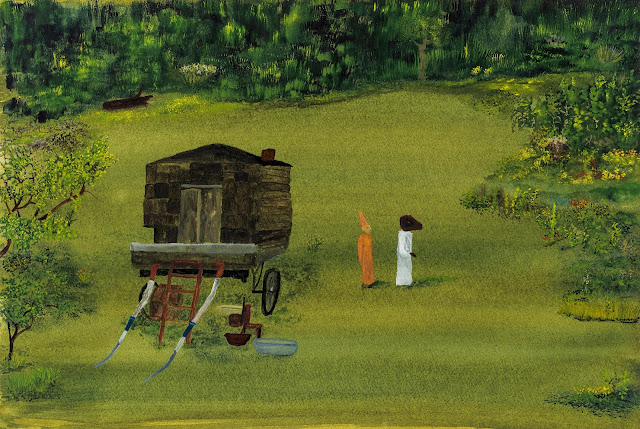
"You've got to have a certain amount of discipline and format so that the fun can come out on top of it," John Lurie says, laying out the creative philosophy he explores on his new show 'Painting With John'.

MIDWAY THROUGH THE first episode of his new show, Painting With John, John Lurie stands on the porch of his home in the Caribbean, gazing at a serene purplish-pink sunset. “I felt I should use this beautiful moment to say something poetic, but I don’t have anything. So just imagine I’m saying something poetic,” he says, addressing the viewer. Then, after a beat, “Why put it all on me? There’s a sunset. You think of something poetic.”

The sequence captures a quintessential Lurie-an mood, in which gruff, deadpan humor mingles with arresting beauty. Fans of the polymathic artist know this sensation well from a variety of media, dating back more than 40 years: the otherworldly grooves and trancelike improv of the Lounge Lizards, the No Wave–turned-globalist-jazz band Lurie led and played saxophone in from the late Seventies through the late Nineties; his naturalistic turns in classic Eighties films including Jim Jarmusch’s Stranger Than Paradise and Down by Law, and Martin Scorsese’s The Last Temptation of Christ; his lovably droll early-Nineties travel show Fishing With John, featuring famous guests like Dennis Hopper and Willem Dafoe; and the surreal, painstaking, and often oddly poignant paintings he’s focused on in the 2000s, since an extended bout of Lyme disease (followed more recently by cancer), has prevented him from playing music.

Season One of Lurie’s new show — the first of six episodes premiered January 22nd, 2021 on HBO — grew out of casual pre-pandemic phone-camera clips taken by his longtime assistant, Nesrin Wolf. “She’s been wanting to put little things of me painting on Instagram forever,” Lurie told Rolling Stone via phone earlier this week. “I haven’t really felt comfortable, but this was really funny, and I said, ‘Let’s do this.'”

Lurie then invited Erik Mockus, who had made videos for his fictional-bluesman alter ego Marvin Pontiac, to shoot and edit the show. “We had fun working and then we just sort of started building it, just like you would start putting an old car together in the garage, or something.”

Painting With John tweaks the formula of an instructional art show in much the same way that Fishing With John did the nature program. As with the bulk of Lurie’s output, it swirls together a mystic’s appreciation for the sublime with the dry wit and healthy skepticism of a New York–bred wiseass. We sit with Lurie as he paints and simultaneously reminisces in his gravelly rumble of a voice about everything from the time he spent hours snorting coke in a broom closet with Rick James and Studio 54 co-owner Steve Rubell to the time he bartered for a live eel for a Lounge Lizards cover shoot in a Chinatown backroom. He also spends plenty of time disparaging his own credentials as a painting authority (“I really don’t know what the fuck I’m doing”) and good-naturedly griping about the show’s talking-to-the-camera format. But hidden in between the quips and colorful tales are genuine insights about nurturing creativity and preserving what Lurie calls “that childlike wonderment thing” that’s always driven his art.

The show also offers a window into Lurie’s quiet life in the Caribbean. He ended up there, he says in Episode Six, after feeling “boxed in,” but says that the move ended up being beneficial. We see the now-68-year-old downtown artist living a very different life, and looking considerably more grizzled than the last time he hosted his own show, sporting a bushy gray-and-brown goatee. But there’s something like peace in his nighttime painting sessions, soundtracked only by the sound of tree frogs, and his sitcom-like banter with Wolf and another woman who works for him, Ann Mary Gludd James. (“Do you mind telling the people at home what a good and fair boss I am?” he asks them at several points; they try to roll their eyes, but the three inevitably crack up.) Add in the lush beauty of the undisclosed island where he lives and background music drawn from the back catalogs of bands and his soundtrack work, and you have a dreamlike audiovisual world that somehow only could have sprung from Lurie’s brain.

In a wide-ranging chat, Lurie talked about why he doesn’t really have beef with Bob Ross, the time he hit Painting With John co-producer Adam McKay in the head with a pool cue, what he misses about his late friend Anthony Bourdain, and why he was always a better fisherman than you thought.

You’ve said on Twitter that you were hoping to cheer people up a little bit with Painting With John. Was the show specifically designed to lift people’s spirits during the pandemic?
Actually I sort of had a thing with the pandemic where I saw it coming. I was reading about China and what was happening, and it was just like, “Well, this is going to go all around the world and there’s no immunity to it. It’s going to be like that movie with Dustin Hoffman and Cuba Gooding Jr.” But people were pretty depressed before the virus. [Laughs]

In the first episode, you say that “Bob Ross was wrong” and make it clear that in contrast with his work, none of the trees you paint are happy. When did you first realize that you had a bone to pick with him?
Ah, but I really don’t. I mean, I appreciate Bob Ross. What he did was important, but I just knew I wanted to say that none of the trees in my painting are happy; they’re all miserable. I’ve been obsessed with this idea really, about how my parents instilled something in me and my brother and sister that kept the creative spirit in us alive into our adult lives. And so these [monologues] weren’t particularly planned or written out. We set up the camera and I would just talk nonsense, and sort of tied it together. If I’d done it on paper I might have rethought it, but it’s also fun to just start out with the first line being “Bob Ross was wrong.” It’s just like, “What?!? What’s he saying?”

Like, did you see that Morgan Neville documentary on Mister Rogers? How could anybody have anything against Mister Rogers, and they protested at his funeral. So I guess Bob Ross is gonna get his. [Laughs]

That bit in the show about how hard it can be to hold on to your childlike wonderment was really powerful. What’s your advice for someone who feels like they’re cut off from that?
If you’re even thinking like that, that’s probably a good start, no? It’ll come back. I mean it’s in there; just doodle. Start doodling. Give yourself five minutes a day to doodle.

It seems like with this show and with Fishing With John, you’re poking fun at that type of program. Is that harder to do with Painting With John, since everyone already knows you’re a great painter, whereas fishing seemed more like a hobby?
Well, I actually was kind of serious as a fisherman but I had to hide it [laughs]. Anything I did where [it seemed like], “Oh, he does know how to drive a boat …,” I had to cut it all out of the show. So it would be more like I was bumbling, you know? I guess I could have done really bad paintings for the show. But the paintings are more important to me than the show itself so I couldn’t do it. [Laughs]

It’s really cool to watch you tell these surreal and often hilarious stories, and then watch you work so precisely with the brush. It’s an interesting contrast.
I can’t tell how it works at all. I’m just so curious as to how this is going to be seen, but the little bit of press that’s come out so far, it’s like, oh, people get it. But I didn’t expect this was going to go to HBO. I was just doing this little thing and then Adam McKay saw it and said, “I’m going to get this seen,” and then it’s like, “HBO wants it.” It’s like, “Really?” So I’m a little unprepared for what’s gonna happen next.

Did you have a prior relationship with Adam McKay?
No, no, though I did hit him in the head with a pool cue once.

Tell me about that.
He reminded me about that when we spoke on the phone. I was in a bar in the East Village and they had a pool table and I was playing. There wasn’t much room and I had to hit the ball with a certain amount of English, like with a snapback, so that the cue ball kind of bounced off and came the other way. I drew back the cue after I hit the ball, and when I pulled back, I pulled really hard and I hit somebody in the head with the stick. I said, “Oh, I’m sorry.” I turned around and I saw it was Will Ferrell, and this was a long time ago so Will Ferrell wasn’t super famous. But I recognized him and a couple other people from Saturday Night Live, and apparently the guy I hit in the head was Adam McKay. I just said sorry, and he was like, “No, it’s fine.” And so when I talked to him on the phone, he said, “You know we met before; you hit me in the head with a cue stick.”

In the show, you stress how important it is to have fun every day; at one point you mention how that idea is really celebrated in Thailand, through the idea of sanuk. How do you balance sanuk with the obvious dedication to your craft that it takes to get really good at something?
They’re not opposed to each other. Sanuk, you can put into anything, like washing the dishes or sweeping the floor. But also there’s that Zen thing of just sweeping the floor and noticing how the dust moves. But yeah, sanuk is just about, [in Thailand] they have fun with everything all the time. So if they’re moving boxes together, they tease each other… But they’re parallel-path things; they don’t fight each other. Unless you fuck a painting up and then the sanuk is gone.

“We buried the elephant in the sky”

Did you strive for both of those things at once in your musical career, too? The Lounge Lizards were such a tight and accomplished band, but it seemed like there was also a healthy sense of fun there.
It’s like being a basketball coach — it’s a game but you’ve got to have a certain amount of discipline and format so that the fun can come out on top of it. Anton Fier deserves a lot of credit actually, ’cause he was [the Lounge Lizards’] first drummer and I had written this music, but we were fooling around. We had one rehearsal, and me and [guitarist] Arto [Lindsay] were punks, we were just screwing around and then Anton, in the first couple rehearsals, really kicked our ass like a drill sergeant. He got us to rehearse, which in the punk days you would have turned your nose up to, but it was the right thing to do.

When you were on Anthony Bourdain’s Parts Unknown, you said to him that back in the day, you almost had to hide the fact that you’d practice saxophone because it wasn’t cool at the time to be good at your instrument.
Yeah, no, they would have all sneered at it because everybody that was in a band was really an actor or a painter. There were all these bands starting in the East Village and nobody could play.

Was it harder to get taken seriously, because people were celebrating that kind of punk ideal?
Oh, when we started to get good, we lost our audience. [Laughs] We really started with doing our stripper tune, or a Peter Gunn kind of thing and with Arto crashing around and then we would fuck it up on purpose. Or we used to do [Thelonious Monk’s] “Epistrophy.” But, like, at breakneck speed with Evan [Lurie, John’s brother] playing, but he would play it on the organ like [sings the melody double-time, out of control], and I would go bam, bah-bahhh! Instead of like how it’s supposed to go. The audience would go crazy and at the beginning, it was, like, the thing to see, but we were campy. Andy Warhol would be in the front row and it would be mobbed. And then as the music got more serious and better, we lost our audience. I mean, completely. When we played at Tramp’s one night, there were nine people there and it took a long time to get it back because as the music became more elegant and serious, it was hated. So it took a while.

And we never caught on in the States. It was Europe and Japan that said, “Oh…,” and we started getting booked at jazz festivals and things like that. We couldn’t get a record deal forever and we got booked at no jazz festivals in America. I wonder if that’s going to happen in my nineties or something.

Those later records like Voice of Chunk and Queen of All Ears hold up so well. That music is obviously featured all over Painting With John. Is it bittersweet in a way to revisit that body of work? What is it like for you to hear it now?
Yeah, I do want it to get recognized for what it was. I feel like it hasn’t really been noticed yet. So I hope the show does point to the music and the Marvin Pontiac stuff, too, but those records you mentioned, for sure. I hope it does make people go, “Oh!” And I hope they kind of discover it on their own. ‘Cause recognition, I try not to let it be something that’s important, but you want something recognized and respected. You don’t want it to just disappear completely.

But I can’t play the saxophone anymore ’cause of the Lyme disease. So it’s kind of weird. We put out a record a few years ago. We re-released this live stuff for the John Lurie National Orchestra.

I love that record.
It was a trio thing and all of a sudden, the jazz press was like, “Oh, yeah, John Lurie was a great saxophone player.” And I was just like, “Where the fuck were you when I needed you to write that?” So we could have played at Lincoln Center instead of [some] grunge punk club. It did kind of piss me off that they didn’t recognize it at the time and now, 20 years after I can’t play anymore, they’re like, “Oh, his saxophone playing was amazing.”

You’ve talked a lot about that moment in New York, and how downtown was sort of the center of the universe. With this show, it’s so much about you being in this remote location in the Caribbean. Do you think it was ultimately good for your art that you made that change?
Well, I don’t think so. It was better for my health, but [not] for my art. When I first got the Lyme disease, I was just stuck in my apartment — I went to the doctor and never left otherwise, and I would just paint. I was sort of making windows for myself, you know? And there were a lot of flowers in the paintings because I was creating that and then I moved down to this place where there’s flowers everywhere. So now, it’s like, “Oh, these fucking flowers are everywhere.” [Laughs] Does that make sense?

Yeah, absolutely. So many of the coolest moments of the show are where we see this beautiful foliage and you’re standing there appreciating it. It really gives a sense of the stillness and the peacefulness of the setting. Is that what it feels like when you’re there?
I mean, we tried to make it more idyllic than it was. We didn’t have an episode about the giant termite nest that’s stuck in my water tank, you know? [Laughs] Maybe we should have. But yeah, the internet goes out all the time; the phone doesn’t work, which is good, but there’s still noise there.

I once went — we were doing the Thailand [Fishing With John] show with Dennis [Hopper], and we went to this little tiny island. I think we went to Ko Phi Phi, and they shut off engines to the boat and it was just like this whoosh that you’re not aware of because it’s all the time. But this whoosh of God knows what we hear, with cell-phone towers and… it just stopped. And it was so peaceful. But I think we can kind of subliminally hear all this shit.

One of the really fascinating episodes is the fourth one, where you’re talking about fame, the toll it can take, and how you’ve actively tried to undo it. Do you feel like you’ve succeeded?
Yeah, but now I’ve done this show, so who knows what’s gonna happen next. Like I said before, you want recognition for the music and for the paintings. It’s like, you make this thing, you want it out there, and then the way to get them out there is to have fame. The work doesn’t seem to go out on its own merits, so you’re kind of willing to put up with that. I mean, it depends — fame does get people to return your phone calls faster. But kind of the message is, there’s these kids who want to be famous, and they don’t even know what that means. So I’ve been on both sides of it and there’s a certain plasticky thing it does to your soul that makes you lose your balance.

You also go into how you were starting to become friends with Bourdain just before he died and how he seemed haunted by fame. What’s your best memory of him from the short time that you knew him?
I mean, I hardly knew him. He came to my place in New York and we just hit it [off] immediately. I was talking to him about this kind of famous horrible shit that had happened to me and he just got it. Or he already knew what most of it [was], and had figured it out on its own because there’s stuff I can’t talk about in the press. He read between the lines and understood what had happened, like, before I explained it, and nobody had ever done that. Then he just was my new best friend within minutes. Like, he was going to Europe and when he came back we were going to go out to eat, and I said, “Pick a place where nobody knows you, so they just leave us alone.” I said, “It’s such a relief to not be famous anymore.” He just stopped like he’d been hit in the head with a hammer, and then he looked at the floor, and he looked at me and said, “I think I’m agoraphobic now.”

It just hit me so hard; it was just like, God, the guy can’t protect himself from this shit and he can’t go anywhere ’cause they know him everywhere. So we were supposed to have lunch. A few days later, I open up the computer and he’s killed himself. It was just … What the…? It just hit me all so weird. So awful.

You said on Twitter that you were furious with him after you heard the news.
I was, and then people got mad at me for saying that, so I took it down. But that was one of my initial reactions — I was enraged. One, just ’cause I hurt so bad; I was just angry at the person who’d hurt me. But mostly, yeah, that was my natural reaction. And also I just hope wherever he went, I hope he was OK. But yeah, I was angry.

I think people can understand that it comes out of care and concern. There’s another memorable part of the show where you say that you don’t trust someone till you’ve heard them laugh. Because I know you’ve been following politics closely lately, how would you rate Joe Biden’s laugh?
Nah, not so good. I mean, at the moment, it’s just, anything is better than Trump. Kamala Harris has a halfway-decent laugh. I don’t trust her either, actually, but she’s got a decent laugh.

Were you watching live when the Capitol riot happened?
Yeah. I love that kind of shit, so I called Evan on the phone, and I said, “I love this!” Because I like hurricanes and things like that. I don’t know what’s wrong with me, but on the island, if there’s a hurricane — they seem to all go north of us, but when it turns the other way, I get disappointed. I don’t know what’s wrong with me like that. The mayhem kind of excites me, I suppose. But yeah, I was watching. As it was happening live, you didn’t know how horrible it was, what was going on. And is the fucking thing based on racism? That’s really what it seems, right?

Yes. That and xenophobia.
These white people who are pissed that they’re losing their privilege and that’s why they support Trump and that’s why they’re … I don’t know, man. I had no idea it was really that bad.

From the show, it seems as if you’ve been a little suspicious of America for a long time.
Yeah. I would say [that], yeah.

When did that start?
Well, my parents were pretty left of left of left. They started young. I mean, my dad, before Vietnam was even something to protest, these kids, these nerds were setting their draft cards on fire and they were being beaten up by these football kind of guys. At 15, I was desperate, drinking Nutrament and five raw eggs for breakfast to gain enough weight to be on the football team so I’d be in with these Neanderthal guys. They were the kind of guys who were beating these kids up on the TV and I didn’t really understand what was going on. My dad was dying, and I said, “What could I do to make you proud of me?” And he said, “You can show as much courage as those kids who burned their draft cards today. I’d be proud of you.” I didn’t understand it all at the time what it meant, but it was a good message. So they instilled that in me. It’s not like being against America. It was just, like, fighting for what’s right.

The Barry White story you told in the show was awesome, how you met him and he said he was a fan of Voice of Chunk. Was that the best celebrity compliment you ever received, or were there other other great ones that came out of left field that you never expected?
Maybe. … Martin Scorsese, we were having lunch during Last Temptation of Christ and he turns to me — everybody’s [hanging] on Marty’s every word during the movie. And so we’re out at lunch, and Marty turns to me and says, “John Lurie, your music is for alienated people,” and he got up and walked away. [Laughs] I don’t think that was a compliment.

“Martin Scorsese, we were having lunch during Last Temptation of Christ and he turns to me and says, ‘John Lurie, your music is for alienated people,’ and he got up and walked away.”

One person you don’t really talk about in the show is your old friend Basquiat. Do you feel like there were specific things about painting and art that you took away from knowing him?
He was a kid who slept on my floor. So, it’s the other way around. You know what I mean? He followed me around; he was 17 and I was, whatever, eight years older. I didn’t even think to mention him in the show.

Though there’s a great story I wish I had told, where we were really stoned — he used to smoke this pot that was just insane — and we were very stoned, and we used to do this thing of slow-motion boxing. Then I stepped backwards and into a tray of paint, he throws another punch in slow motion, and I stepped right onto a canvas that was on the floor that was half-finished and I was like, “Ah, Willie!” I used to call him Willie Mays. “I’m so sorry, man!” He just laughed and said OK. Then years later, after he died, the painting was at the Guggenheim at this gigantic show — I’m pretty sure it’s the same one, unless other people stepped on his paintings, — and there’s my footprint on the painting right? So I stepped forward, and there’s still the velvet ropes that separate you from the painting, and I’m not past the velvet rope, but my arm is past it and I’m pointing: “Oh, look, there’s my footprint.” And the guards come running over, like, “Sir, sir, move away from the painting.” It’s like, damn, I’ve already fuckin’ stepped on it; what am I going to do with my finger?
“They were weird but they saw something even weirder”

You’ve been very open for a while now about your struggles with Lyme disease and cancer. How do you feel day-to-day health-wise?
It comes and goes. I feel fine at the moment, but last night around 1 a.m., I thought I was gonna die for about 10 minutes. I mean, this stuff just comes over you. It’s hard to figure out what’s from Lyme disease and what’s held over stuff from the cancer treatment. The side effects kind of come and go for a long time, more than what they warned you about before you do it. I’ve talked to other people who still, three years later, have weird side effects left over. Also, I’m 68 years old and I’ve beaten this body to a pulp many times, so it’s hard to know exactly what’s what’s going on. But you just get these migrating symptoms throughout the course of the day.

That said, it seems like you’re pretty productive, and keeping on a tight schedule with your painting.
Oh, I paint all the time. I paint hours and hours, and I feel better when I’m painting, and also the symptoms seem to sort of drop away. Sometimes my vision will be so fucked up or I won’t be able to move my hand properly because of the illness and then I have to stop, but that’s rare. Usually I can kind of just work through it and it sort of drops away till you stop. I saw a great thing with Johnny Cash once when he was on Larry King, or something like that, and he had … I forgot what was wrong with him. But he’d have all this pain and he’d talk about walking out on stage and how it would just drop away, and it’s just … it’s just, like, concentrating on your work and then the pain drops away. But I try to paint every moment I have. I put myself in this sort of a trance state and just paint. I’d rather be doing that than pretty much anything else. I’m compelled to do it.

There’s that moment in the show where you’re talking about how it occurred to you at one point that painting could give you back what you lost from music. Has it really filled that hole for you? 
Yeah, yes. I mean, there’s not that thing where, like, you’re hovering off the ground and visiting God’s house for a while. You don’t quite get that, but you get something close.

MKRdezign

Contact Form

Name

Email *

Message *

Powered by Blogger.
Javascript DisablePlease Enable Javascript To See All Widget